• Skip to primary navigation
  • Skip to main content
  • Skip to primary sidebar
  • Skip to footer

My Plant-Based Family

Feeding My Family a Whole Food, Plant-Based Diet, On a Budget

  • Plant-Based Recipes
    • Breakfast
    • Main Dish
    • Instant Pot
    • Side Dishes
    • Bread and Muffins
    • Salad and Wraps
    • Soup, Stews, and Chili
    • Sauces, Dips, and Salad Dressings
    • Desserts
    • Crock Pot
    • Mexican Food
  • Videos
  • Resources
    • Getting Started
    • Custom Meal Plans
    • Plant-Based eCourse
    • Books
      • The Plant-Based Diet Starter Guide
      • The Plant-Based Holiday Meal Plan & Cookbook
  • Meal Plans
    • Meal Plans 2020
    • Meal Plans 2019
    • Meal Plans 2017
    • Meal Plans 2016
    • Meal Plans 2015
    • Meal Plans 2014
    • Meal Plans 2013
  • About Us
    • Our Family
    • Contact Me
    • Our Food Philosophy
    • Disclosure Policy
      • Privacy Policy

Plant-Based Basics

Plant-Based Basics: Potatoes

November 21, 2014 by Holly Yzquierdo 1 Comment

Plant Based Basics Potatoes
The third installment of the Plant-Based Basics series. This series is designed for those who are new to a plant-based diet but I think this installment will be particularly helpful to everyone. 

I can’t tell you how often people ask me if they can eat potatoes. Even more often I hear, “I can’t eat white potatoes they are so bad for you.” Once a lady emailed me admitting she hadn’t eaten a potato in 15 years. In her attempts to lose weight she had avoided carbs and starchy vegetables but was now embracing a plant-based diet.

Plant Based Basics Potatoes

What do the Plant-Based Experts Say?

I’ll admit that the potato issue isn’t completely cut and dry. There is some disagreement among the plant-based experts. Some doctors like Dr. McDougall practically encourage unlimited potatoes while Dr. Fuhrman and other recommend limiting white potatoes if you are overweight or diabetic.

For most experts it depends on the individuals unique medical situation.

Why you Should Eat Potatoes

1. Potatoes are full of important nutrients like potassium, vitamin B-6, vitamin C and more.

2. Potatoes are fat-free, cholesterol-free, sodium-free and low in sugar.

3. Potatoes are high in fiber and most people don’t get enough fiber.

4. Potatoes are inexpensive and have a long shelf life is stored properly.

Types of Potatoes & Ways to Enjoy Them

There are over 100 varieties of potatoes. I most often eat Russet, White, Red, Sweet Potatoes, and Yams but choices vary by region.

I believe the biggest problem with potatoes is the way we choose to eat them. Most potatoes are fried in oil, served as chips, or topped with added fats in the form of oil or dairy.

Potatoes can easily be baked or roasted in the oven and taste just as good when “baked” in the Crock Pot. Some people prefer to steam or boil potatoes as well.

My Favorite Potato Recipes

I’ll often grab a leftover baked potato as a snack or a quick breakfast. I have lots of potato recipes but some of my favorite meals are happy accidents with leftover potatoes and whatever else is on hand.

plant based basics potatoes

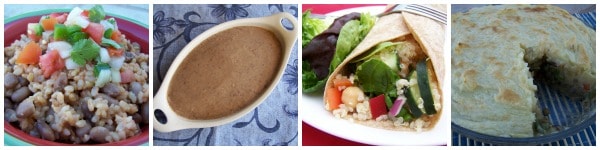
Pictured above you’ll find Taco Potatoes, Dirty Mashed Potatoes, Lentil and Potato Stew and Breakfast Tacos/Burritos.

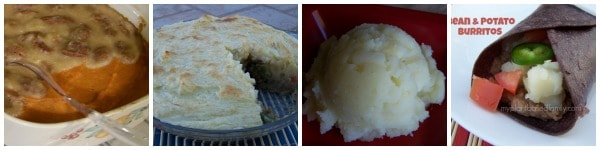
More favorites (pictured below) include Sweet Potato Casserole, Lentil Shepherd’s Pie, Light & Fluffy Mashed Potatoes and Bean & Potato Burritos.
plant based basics potatoes

My most popular potato recipe is my Slow Cooker Potato Soup. It’s really easy to make and absolutely delicious. See my Recipe Page for more recipes featuring potatoes.

Don’t miss the previous installments of the Plant-Based Basics Series.

  • Plant-Based Basics: Beans
  • Plant-Based Basics: Grains

The Plant-Based Diet Starter Guide


Filed Under: Plant-Based Basics Tagged With: Baked Potatoes, gluten free, Healthy, Plant Based Diet, plant-based basics, Vegan

Need Help with your Plant-Based Diet?

August 17, 2014 by Holly Yzquierdo 2 Comments

The Plant-Based Diet Starter Guide: How to Cook, Shop and Eat Well is $2 off during August

Have you been considering my ebook The Plant-Based Diet Starter Guide: How to Cook, Shop and Eat Well? If you I have great news for you!

In honor of Back to School month here at My Plant-Based Family I’m offering $2.00 OFF the PDF copy through the end of August. Please note that this is only for the PDF copy sold here and not for the kindle version sold on Amazon.

Back to School Month

I’ve been getting so many emails from new readers who are just discovering the plant-based diet and I really want to make the transition as easy on you as possible.

This book covers all the basics of a plant-based diet in an easy to read format. I leave the science to the doctors and explain exactly how to get it done in the real world including a chapter on transitioning your family.

To get $2.00 OFF your purchase of The Plant-Based Diet Starter Guide (PDF ebook) use the code backtoschool. Remember it’s this sale is only happening until August 31st! Add to Cart

The Plant-Based Diet Starter Guide: How to Cook, Shop and Eat Well is $2 off during AugustAdd to Cart

The Plant-Based Diet Starter Guide has helped many people take that next step and fully transition to a plant-based diet.

Have you read The Plant-Based Diet Starter Guide Yet? What did you think of it?

Filed Under: Back to School, How to, Plant-Based Basics Tagged With: How To, Plant Based Diet, Recipes, Starter Guide, Vegan

Plant-Based Basics: Grains

July 11, 2014 by Holly Yzquierdo 7 Comments

Plant Based Basics Grains

This is the second installment in a series called Plant-Based Basics. This series is designed for those of you who are brand new to a plant-based diet but I think the information will serve as a helpful reminder for anyone.

Plant Based Basics Grains

Today’s focus will be on Grains. In recent years there is a lot of controversy surrounding grains. Books, blogs and “experts” are claiming that grains are evil and don’t belong in your diet.

I have a serious problem with that point of view. Often when people refer to grains they group all grains and products made with grain into the same category; let’s not pretend rolled oats are equal to donuts. These people also talk about how bad carbs are for you.

Or they base their opinions on “experts” that haven’t done any legitimate studies. Since I am not a medical professional I’ll leave the science to the expert’s like Dr. McDougall (read his article that counter’s the claims in the leading anti-grain movement).

I’m not claiming that all grains are healthy for everyone. If you’ve been around here long you know my son cannot handle wheat/gluten. We avoid all grains containing gluten for his sake.

Whole grains that are minimally processed are healthy and should be eaten (unless you have a medical condition that requires a grain-free diet).

Grains, especially whole grains, are an essential part of a healthy diet. All types of grains are good sources of complex carbohydrates and some key vitamins and minerals. Grains are also naturally low in fat. All of this makes grains a healthy option. Better yet, they’ve been linked to a lower risk of heart disease, diabetes, certain cancers and other health problems. Mayo Clinic

Examples of Whole Grains

There are more varieties of grains than I can mention. I have the most experience with rice, wheat, oats, corn, barley, and millet. Grains are often ground into flour and refined. To maintain their healthy promoting properties I recommend you enjoy them with as little processing as possible.

How to Eat Whole Grains

I prefer to cook grains but many people like to sprout them and eat them raw. Many grains can be cooked with a 2:1 water to grain ratio while some might require more water.

Favorite Recipes

Whole Grain Breakfast Ideas

Oats

Blueberry Oatmeal and Peachy Keen Oatmeal are two seasonal favorites. We also enjoy Apple Cinnamon Oatmeal all year since apples are easier to get our hands on for a good price. We buy Gluten-Free Oats on Amazon since I regularly cook for people with gluten sensitivity.
quinoa ideas

Quinoa

Technically speaking quinoa isn’t a grain, the part we eat is a seed but we cook and eat it as a grain so I’m including it in this round-up. We love quinoa; it is naturally gluten-free, cooks quickly and can take on other flavors nicely. I’ll often buy it at Costco. I stopped buying it from bulk bins due to cross-contamination.

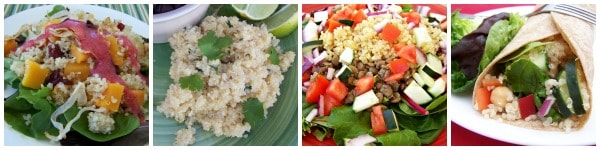
We enjoy Breakfast Quinoa and Summer Berry Breakfast Quinoa both warm and cold. I use it in place of rice in soups and stir frys. I’m partial to Mexican inspired flavors like Cilantro-Lime Quinoa, Quinoa Taco “Meat” and Quinoa-Lentil Tacos. I also enjoy adding quinoa to salads and wraps like in this Quinoa-Lentil Salad, Butternut Squash Quinoa Salad, and Lemony Quinoa Salad.

You can follow my Quinoa Pinterest Board for more ideas.

whole grain rice ideas

Rice

There are thousands of different varieties of rice. I’ll admit that I’m barely familiar with a few. I prefer brown rice. It is easily available in my area. I’m willing to bet you can buy rice in any grocery store but I usually buy it at Costco. Brown Rice can also be bought on Amazon.

Some of my most popular brown rice recipes are my Easy Crock Pot Mexican Rice and Bean Casserole (or the stove top or oven version), Crock Pot Brown Rice Casserole, Mexican Rice, Green Chili-Cilantro-Lime Soup, and Enchilada Soup.

We also eat rice for breakfast. Sometimes we mix it with Overnight Chia Porridge and other times opt for Raisin-Apple-Cinnamon Breakfast Rice.

Other Grains

There are many other types of grains. I usually just stick to those mentioned above due to allergies, budget considerations and bulk purchases. Years ago I cooked amaranth, millet, barely and others regularly. I still enjoy a good Lentil-Barley Stew occasionally.

Do you eat grains? What are your favorites?

Don’t forget to check out the first installment of this series Plant-Based Basics: Beans!

ebook

This post contains affiliate links.

Filed Under: Plant-Based Basics Tagged With: grains, Plant Based Diet, Unprocessed, Vegan

Plant-Based Basics: Beans

June 6, 2014 by Holly Yzquierdo Leave a Comment

Plant-Based Basics: Beans What you need to know to get started eating healthy

Today I’m starting a new series called Plant-Based Basics! This series is one you won’t want to miss if you are new to a plant-based diet or if you feel like you’ve been struggling to eat well. This series will also be the perfect thing to send to you friends or family who are curious about what you eat.

Plant-Based Basics: Beans What you need to know to get started eating healthy

Today’s focus will be on Beans. For many plant-based eaters, myself included, beans make up a large portion of our diet.

Why Eat Beans

Let’s look at a few reasons that Beans are so good for you.

  • High in Soluble and Insoluble FiberWhy eat beans?
  • High in Protein
  • High in Carbohydrates
  • High in Minerals
  • High in Vitamins
  • Low in Fat
  • No Cholesterol

Eating beans reduces the risk of “chronic disease such as obesity, cancer, diabetes, and heart disease” according to the USDA.

Beans are easy to include into your menu whether you eat vegan, vegetarian, or just trying to cut your grocery bill.

There are a lot of different types of beans too. I typically use pinto beans, black beans, white beans, and chickpeas most often. My favorite bean to use when I’m in a hurry is the lentil. Lentils are smaller and cook quickly.

Canned vs. Dry Beans

Canned beans are delicious and healthy. Although canned beans often contain large amounts of salt. Reduce the sodium levels by rinsing canned beans before using. Canned beans are fully cooked and can be eaten without any further preparation.

Dry Beans need to be cooked before eating. Follow the steps below for Soaking and Cooking Dry Beans or use this Printer-Friendly Guide: How to Soak and Cook Dry Beans.

You can expect to spend a lot more money on canned beans compared to dry beans. While dry beans are less expensive they take more time to prepare. Most people still consider canned beans to be inexpensive compared to animal products.

How to Soak and Cook Dry Beans

  1. Sort dry beans making sure there are no rocks, sticks or other debris.
  2. Rinse your beans with clean water.
  3. Put rinsed beans in a pot and cover them with water. I generally use a 1 part bean, 2 parts water ratio but you can use more water.
  4. Soak beans overnight.
  5. The next day, rinse the beans again and refill water. The water should cover the beans.
  6. Bring the beans to a boil, then turn it down to a simmer. Cook the beans from 1-3 hours. Some beans take longer to cook than others. (You can add onions, garlic, a bay leaf, etc. if desired.)
  7. Beans become soft when done. You can scoop up a few beans in a spoon and lightly blow on them, if the bean skin peels away they are done.

A one pound bag of dry beans is about 2 1/2 cups. Once cooked they will make about 5 cups of beans.

One can of beans is about 1 1/2 cups. Most of the time you will want to drain and rinse the beans if using canned.

Lentils do not need to be soaked prior to cooking. They cook quickly in about 20 minutes.

Some people swear by products like the Instant Pot Programmable Pressure Cooker, Stove Top Pressure Cooker’s, or Crock-Pot Slow Cookers for cooking beans.

Plant-Based Beans

How to Eat Beans

Beans are incredibly versatile! They can be eaten whole, puréed, ground into flour, partially mashed or even baked into treats.

We eat whole beans often. I like them in burritos, wraps, casseroles, mixed into soup or chili or just by themselves.

We also eat puréed beans a lot. Hummus is a popular bean recipe that can be made in a ton of different flavors.

Plant-Based Beans

Favorite Recipes that use Beans

Most of our favorite recipes are Mexican food but beans are used throughout the world.  These recipes are our favorites. Feel free to add links to your favorite recipes in the comments.

Even when a recipe specifies a particular kind of bean, often other beans can be substituted.

I use pinto beans and black beans interchangeably in many recipes including Taco Soup, Enchilada Soup, Unfried Beans (although I alter the spices slightly when making Unfried Black Beans), Taco Salad, Mexican Rice and Bean Casserole, or Bean and Grain Bowls.

I use white beans (Great Northern Beans) and garbanzo beans interchangeable too.  A few of our favorite recipes are Green Chili White Bean Dip, Lasagna, Creamy Italian Salad Dressing, Chickpea Noodle Soup, Lemony Quinoa Salad and many more.

I use lentils in Lentil Tacos, Quinoa-Lentil Tacos, Lentil & Barley Stew, Quinoa-Lentil Salad and Lentil Shepherd’s Pie. I also randomly include them in almost anything. I feel like Lentils are the ultimate super food.

Are you a Bean Eater? What is your favorite way to prepare and enjoy beans?

This post contains affiliate links.

Filed Under: Frugal, How to, Planning, Plant-Based Basics Tagged With: Basics, Beans, Plant Based Diet, Unprocessed, Vegan

« Previous Page

Primary Sidebar

Footer

Find it here!

Amazon Affiliate Disclosure

Holly Yzquierdo of My Plant-Based Family is a participant in the Amazon Services LLC Associates Program, an affiliate advertising program designed to provide a means for sites to earn advertising fees by advertising and linking to amazon.com.

Disclosures

Unauthorized use and/or duplication of any part of this website or content without express and written permission from Holly Yzquierdo is prohibited. Excerpts and links may be used, provided that full credit is given to Holly Yzquierdo and MyPlantBasedFamily.com with links to the original content.

More information on our Privacy Policy and other Disclosures are available.

Copyright © 2023 · Wellness Pro on Genesis Framework · WordPress · Log in